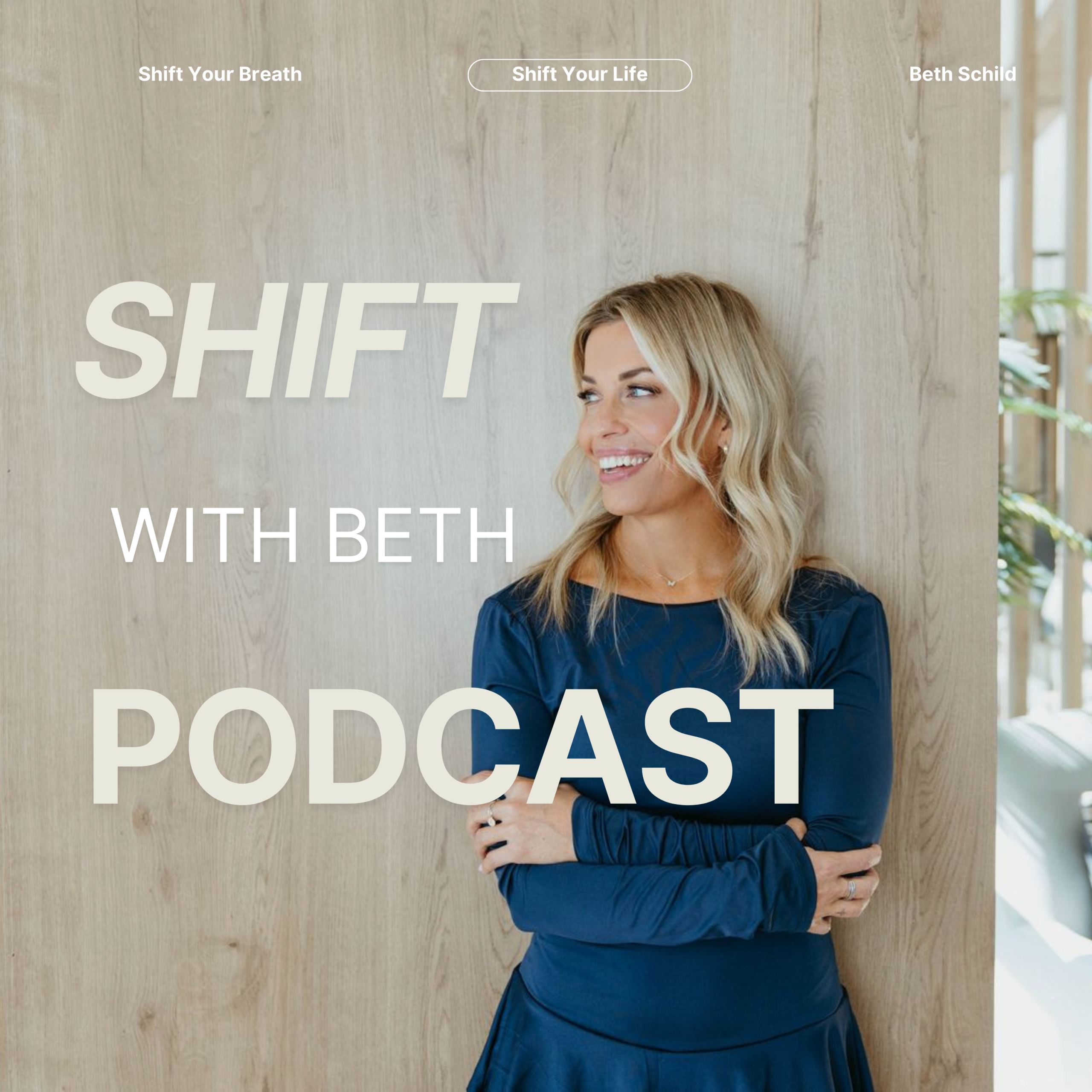
Hosted By

What does it actually mean to be a strong man?
For generations, many boys have received messages about masculinity long before they were old enough to question them.
Don't cry.
Be strong.
Handle it yourself.
Don't be afraid.
Don't show weakness.
Those messages can become so deeply embedded that eventually they stop feeling like beliefs at all. They simply feel like who you are.
But what if some of what we've been taught about masculinity isn't authentic masculinity at all?
In this episode of The Shift with Beth Podcast, I sat down with my dear friend Ben Wood for a conversation about masculinity, emotional safety, vulnerability, relationships, and what happens when men begin looking underneath the identities they've learned to perform.
Ben is currently writing The Mask of Masculinity, a book inspired by his own journey of understanding the difference between the man he learned to present to the world and the person underneath that performance.
And this conversation isn't coming from someone claiming to have everything figured out.
That's actually what makes it so powerful.
It's about a man willing to look inward, get curious about his patterns, and continue doing the work.
One of the most important parts of our conversation was Ben's experience with emotion.
Like so many boys, he learned early that certain feelings were more acceptable than others.
Sadness could feel weak.
Crying could invite judgment.
Vulnerability could feel unsafe.
When a child repeatedly receives those messages, consciously or unconsciously, the emotion itself can eventually become connected to shame.
The child doesn't necessarily stop experiencing sadness. He learns to hide it.
And if he becomes good enough at hiding it, he may eventually struggle to access it at all.
Ben talked openly about how difficult reconnecting with those emotions has been as an adult. Even after years of inner work, he still notices the part of himself that can interpret visible emotion as weakness.
That awareness matters.
Because healing doesn't mean a pattern never appears again.
It means you can begin noticing it rather than automatically letting it run you.
There is no shortage of opinions about what masculinity should look like.
But Ben offered a perspective that stood out to me.
For him, healthy masculine energy is connected to serving, protecting, providing, creating safety, and taking action.
Not controlling.
Not dominating.
Not suppressing every emotion.
And not performing an image of strength while chaos is happening underneath.
This is where the idea behind The Mask of Masculinity becomes so important.
A man can look confident, stoic, successful, and completely in control while internally feeling disconnected from himself.
The performance may look like strength.
But the man underneath may not feel strong at all.
Real inner work asks a different question:
Who are you when you're no longer performing who you learned you were supposed to be?
One of my favorite things Ben shared was his perspective on courage.
We often associate masculinity with bravery.
But bravery cannot exist without fear.
If there is nothing to fear, there is nothing to be brave about.
That means vulnerability doesn't necessarily contradict courage. Vulnerability can actually require it.
For a man who learned that sadness, fear, asking for help, or emotional openness could result in criticism or rejection, allowing those parts of himself to be seen can take enormous courage.
The goal isn't to replace strength with vulnerability.
It's developing enough internal safety to have access to both.
We also explored why anger and frustration can become familiar emotional territory for men.
Ben described recognizing sadness and loneliness underneath some of his own anger.
For many boys, anger may be more socially acceptable than sadness. They see other men express frustration. They see anger portrayed as powerful.
So the nervous system adapts.
A feeling that once seemed unsafe gets expressed through one that feels safer.
This doesn't mean anger itself is bad.
Anger contains information.
Ben shared how physical movement, particularly intentionally channeling that energy through exercise, helps him move anger through his body. Once some of that intensity has shifted, he can become curious about what is underneath it.
Because releasing anger without understanding its source may only provide temporary relief.
The deeper question becomes:
What is this feeling trying to tell me?
Ben also shared his experience with Internal Family Systems, parts work, and connecting with a five-year-old version of himself.
During that work, he began recognizing how early parts of him had learned to hold emotions he didn't know how to process.
What was especially powerful was his realization that this younger part didn't trust him with those feelings.
In a larger sense, he was realizing:
I don't trust myself with my emotions.
This is why understanding our triggers can be so transformative.
A trigger isn't necessarily evidence that something is wrong with you.
Sometimes it's information.
It may point toward a part of you that still doesn't feel safe, seen, understood, or supported.
Instead of immediately trying to eliminate the trigger, we can become curious about it.
Another pattern Ben discusses is his resistance to asking for help.
For him, the question "Do you need help?" could internally translate into something completely different:
"Are you too weak to do this yourself?"
When that's the meaning your nervous system has attached to receiving support, asking for help becomes much more complicated.
You aren't simply accepting assistance.
You're challenging an identity built around competence and independence.
And this is why surface-level behavior changes often aren't enough.
You can tell someone to "ask for help more."
You can tell someone to "communicate better."
You can tell someone to "be more vulnerable."
But if you don't understand why those things feel unsafe in the first place, you're often asking someone to change a behavior without understanding the system underneath it.
Being emotionally available doesn't require reacting to every emotion immediately.
Ben talked about learning that he can experience internal chaos while still choosing when and how to process it.
That's different from pretending the emotion isn't there.
It's awareness.
It's discernment.
It's knowing something is happening inside you without needing to suppress it or immediately act from it.
That capacity can become especially powerful in relationships.
Instead of automatically fixing, defending, withdrawing, or becoming reactive, we can learn to stay present.
Sometimes your partner doesn't need a solution.
Sometimes they need enough safety to experience what they're feeling.
Toward the end of our conversation, I asked Ben what he would tell a man who wants to begin doing this work but has no idea where to start.
His answer was simple:
Get curious.
For someone naturally wired to solve problems, the instinct may be to immediately search for the solution.
But inner work isn't always another problem to solve.
Sometimes the first step is noticing.
"That really bothered me. I wonder why."
"Why is it so difficult for me to ask for help?"
"Why do I shut down when someone criticizes me?"
"Why does sadness feel unsafe?"
"Why do I need to appear like I have everything under control?"
Those questions create space between the pattern and the person.
And in that space, you have more choice.
Perhaps the biggest takeaway from this conversation is that no one else can define your authentic masculinity for you.
Books can give you tools.
Therapists can help you see blind spots.
Partners can reflect things back to you.
Friends can support you.
But ultimately, you have to discover the man underneath the performance for yourself.
That process requires curiosity, courage, support, and a willingness to look at the parts of yourself you may have spent years avoiding.
The goal isn't perfection.
It isn't becoming completely untriggerable or never experiencing anger, fear, sadness, or insecurity again.
It's becoming more aware of what's happening inside you so you can choose how you want to respond.
Because strength doesn't have to mean disconnection.
Vulnerability doesn't have to mean weakness.
And masculinity doesn't have to be a performance.
There can be another way.
Ben Wood is an author, coach, and former corporate executive dedicated to helping men bridge the gap between external performance and authentic selfhood. Holding an engineering degree and an MBA, Ben spent years inside high-pressure environments before walking away from the corporate world to redefine leadership, emotional availability, and connection. He co-runs a coaching and consulting practice in Chicago with his wife, Aimee, and is the author of The Mask of Masculinity.
Beth is a somatic coach, breathwork facilitator, and speaker who helps women and leaders move from survival mode into safety, self-trust, and authentic expression. She bridges nervous system science and spirituality in a grounded, practical way so healing happens beyond mindset.
If this meditation supported you, save this episode and come back whenever your nervous system needs a reset.
Learn more at shiftwithbeth.com
What parts of yourself have you learned to perform because the authentic version of you didn't once feel safe to show?
And what might become possible if you stopped trying to fix yourself long enough to get curious about why those patterns exist?
If this conversation resonates, share it with someone in your life who needs to hear it, and subscribe to The Shift with Beth Podcast for more conversations about healing, relationships, self-trust, and coming home to yourself.
Have you ever caught yourself reacting in a way that felt automatic? Maybe you became defensive during a conversation, shut down when someone offered...
Learn how to regulate your nervous system, understand stress responses, and feel safe in your body again with simple, practical tools.
Most people misunderstand boundaries. They think boundaries are about telling other people what they can or cannot do. They think it sounds like control,...