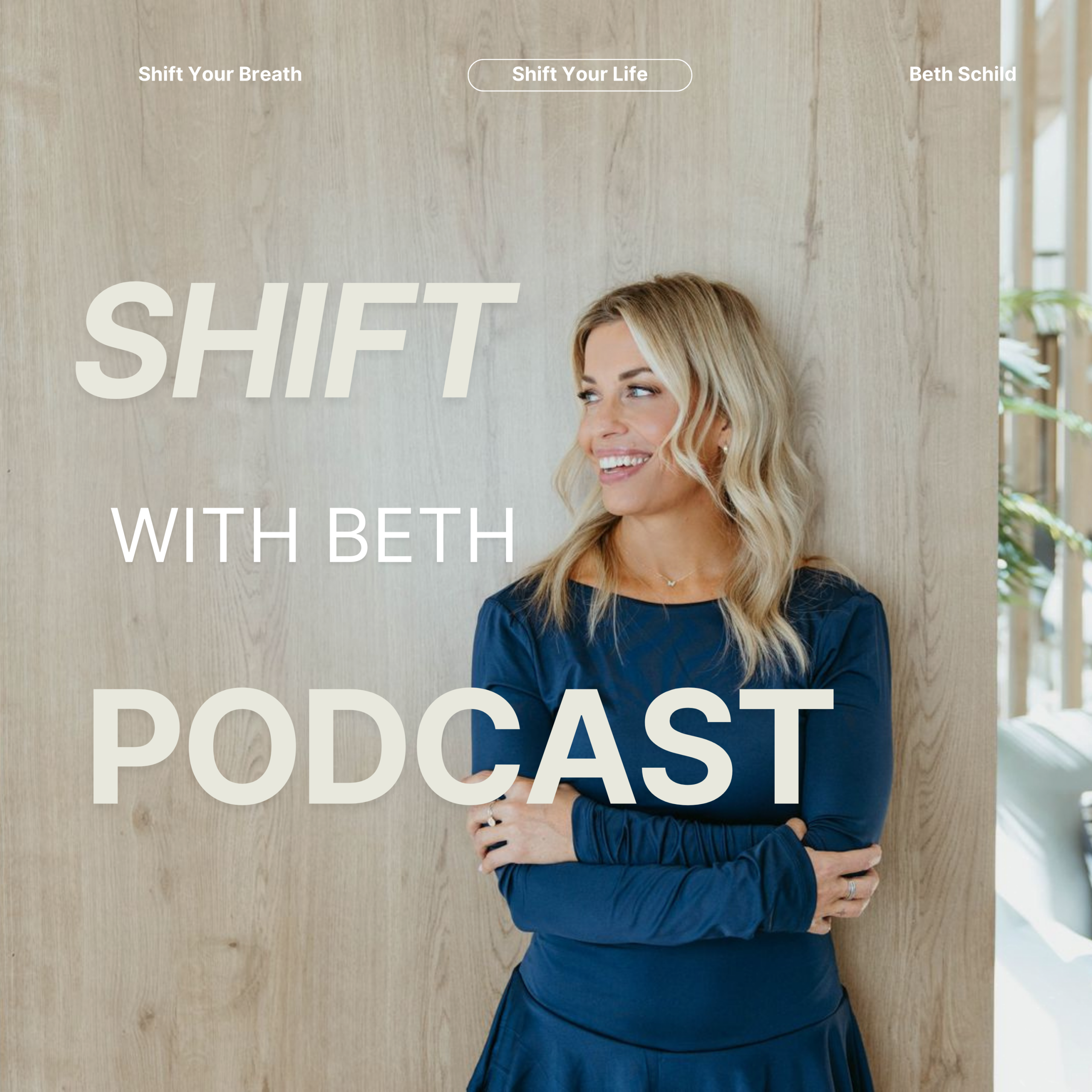
Hosted By

Most of us grow up believing that certain emotions are "good" while others are "bad." Happiness is celebrated. Calmness is praised. But sadness, anxiety, anger, fear, and grief are often treated as problems to fix as quickly as possible.
Over time, many of us learn to avoid difficult emotions instead of understanding them.
We distract ourselves. We stay busy. We scroll social media, overwork, overeat, numb out, or convince ourselves that we "shouldn't" feel the way we do.
But what if your emotions were never the problem?
That single shift has the power to change your relationship with yourself.
One of the biggest misconceptions about emotional health is the belief that emotional healing means feeling happy all the time.
It doesn't.
Being emotionally healthy doesn't mean eliminating difficult emotions. It means learning how to experience all of them without becoming afraid of them.
Every emotion exists for a reason.
Fear helps protect you.
Anger can reveal where a boundary has been crossed.
Grief reflects the depth of your love.
Sadness creates space for healing.
Joy reminds you what connection feels like.
Rather than asking, "How do I stop feeling this?" a more empowering question is, "What is this emotion trying to show me?"
When we stop judging our emotions, they become guides instead of enemies.
Most people were never taught emotional regulation.
Instead, many of us learned emotional suppression.
We heard phrases like:
Without realizing it, we began believing that difficult emotions meant something was wrong with us.
Eventually, we stopped trusting our emotional experience altogether.
Instead of allowing emotions to move through us, we began resisting them.
Ironically, the resistance often creates more suffering than the emotion itself.
Emotions aren't just thoughts.
They're physical experiences happening inside your body.
Your nervous system responds to situations long before your logical mind catches up.
When an emotion arises, your body may respond with a racing heart, a tight chest, butterflies in your stomach, tension in your jaw, or a lump in your throat.
These aren't signs that you're broken.
They're signs that your nervous system is communicating with you.
Learning to listen instead of panic creates an entirely different relationship with yourself.
Many of us become experts at buffering.
Buffering is anything we use to avoid feeling what's actually happening inside us.
Sometimes it's obvious.
Alcohol.
Food.
Shopping.
Social media.
Constant busyness.
Sometimes buffering looks productive.
Working longer hours.
Always taking care of everyone else.
Never slowing down.
The problem isn't the activity itself.
The problem is when it becomes a way of avoiding your emotional experience.
Avoided emotions don't disappear.
They simply remain stored in the body until they're acknowledged and processed.
One of the most reassuring truths about emotions is that they aren't meant to last forever.
When we allow ourselves to fully experience an emotion without resisting, judging, or distracting ourselves, the emotional wave often moves through the body surprisingly quickly.
What keeps emotions alive isn't the feeling itself.
It's our resistance to it.
We tell ourselves we shouldn't feel this way.
We analyze it.
We judge ourselves.
We replay the story over and over.
Instead of allowing the emotion to pass, we unintentionally keep feeding it.
Learning to simply notice an emotion with curiosity creates space for it to move naturally.
Real healing isn't about thinking differently.
It's also about learning to experience your body differently.
Somatic healing teaches us to notice physical sensations before immediately creating stories about them.
Instead of asking, "Why am I like this?" try asking:
These simple questions begin rebuilding trust between your mind and your body.
Many people spend years chasing happiness.
But happiness was never designed to be a permanent emotional state.
Life naturally includes joy, disappointment, excitement, grief, fear, love, uncertainty, and hope.
Trying to eliminate half of the human experience only creates more suffering.
Peace looks different.
Peace means trusting yourself enough to experience whatever emotion arises without believing it defines you.
It means knowing you can feel difficult emotions without becoming consumed by them.
It means understanding that emotions come and go, but your ability to stay connected to yourself can remain.
Healing begins when you stop seeing your emotions as something to overcome.
Instead, they become invitations.
Invitations to slow down.
To listen.
To reconnect with yourself.
To build self-trust.
The goal isn't to never feel anxious, sad, angry, or afraid again.
The goal is to know that when those emotions arise, you have the capacity to meet them with compassion instead of judgment.
Because your emotions aren't the problem.
They never were.
Sometimes they're simply asking you to pay attention.
And that awareness may become the beginning of your deepest healing.
If this episode resonates with you, subscribe to The Shift with Beth Podcast, leave a review, and share it with someone who could benefit from hearing that their emotions are not something they need to fear.
About Beth:
Beth is a somatic coach, breathwork facilitator, and speaker who helps women and leaders move from survival mode into safety, self-trust, and authentic expression. She bridges nervous system science and spirituality in a grounded, practical way so healing happens beyond mindset.
Connect with Beth:
If this episode resonated, follow and subscribe so you don’t miss what’s next. Share it with someone who struggles with boundaries or people-pleasing.
Learn more at shiftwithbeth.com
Have you ever had a moment where you realized the life you were living wasn’t actually yours? In this debut episode of Shift with...
Have you ever caught yourself reacting in a way that felt automatic? Maybe you became defensive during a conversation, shut down when someone offered...
Have you ever wondered why you react so strongly to certain situations? Maybe a small conflict feels catastrophic, or a minor setback sends you...