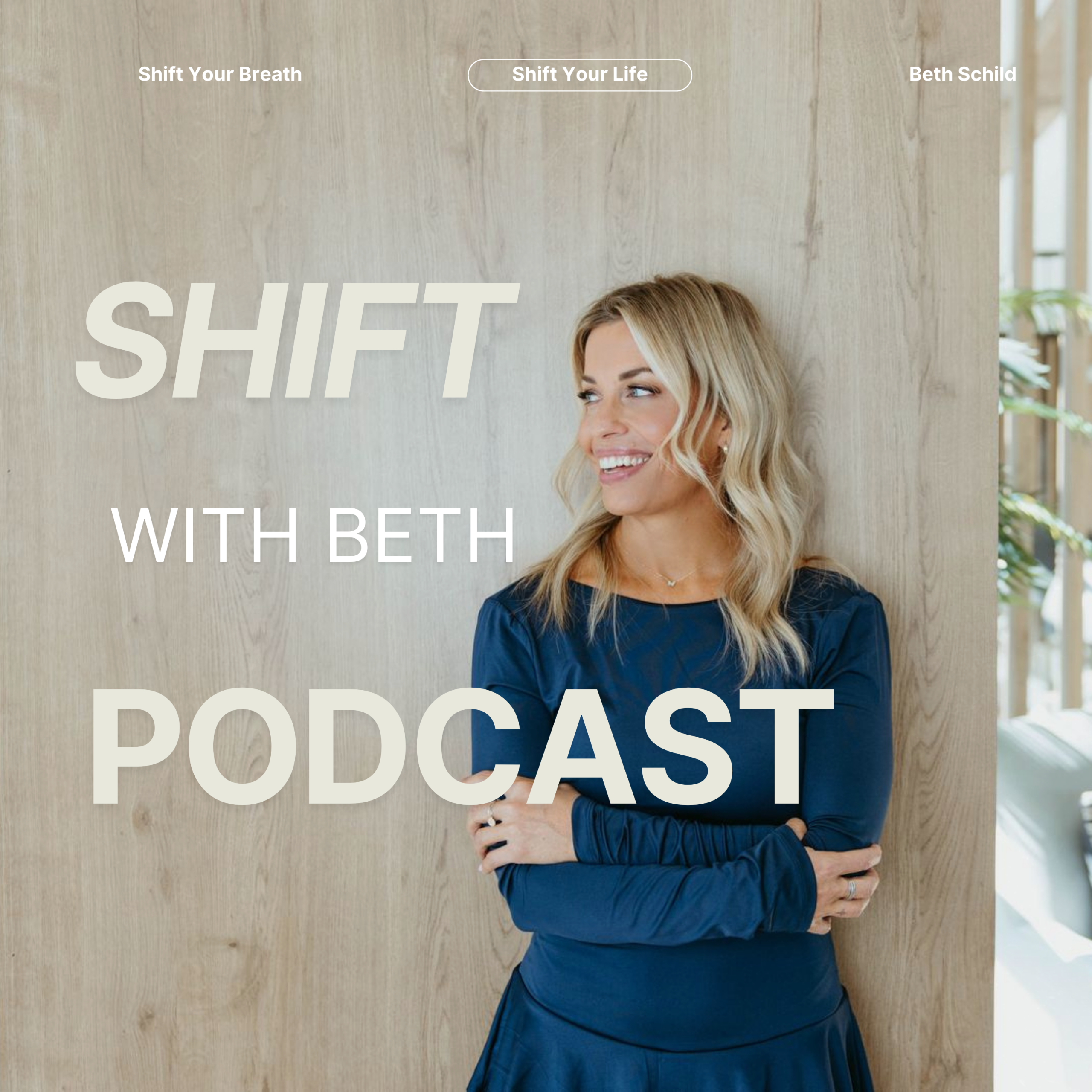
Hosted By

Parenting changes dramatically as our children grow. What works when they're five years old often creates distance when they're fifteen. And by the time they're adults, many parents find themselves facing one of the hardest lessons of all: learning how to let go of control.
In this episode of The Shift with Beth Podcast, Beth explores why letting go feels so difficult, how control impacts our relationships with our children, and what it actually means to create emotional safety as a parent.
Most parents don't wake up thinking, "I want to control my child."
What they're actually trying to do is protect them.
Control often disguises itself as love. It looks like advice, reminders, warnings, monitoring, and trying to prevent mistakes. Underneath those behaviors is usually fear.
Fear that our children will get hurt.
Fear that they'll make choices we wouldn't make.
Fear that they'll struggle.
Fear that somehow their mistakes reflect our success or failure as parents.
The problem is that while control may come from love, it often creates the opposite of what we're hoping for.
When children feel controlled, they rarely feel supported. Instead, they often feel managed, judged, or monitored.
This is especially true during the teenage years.
Many parents assume that more rules, more monitoring, and tighter control will create better behavior. In reality, excessive control often creates secrecy.
Teenagers become incredibly creative when they don't feel emotionally safe.
They hide information.
They stop sharing.
They learn how to avoid conversations.
They protect themselves from disappointment, criticism, or judgment.
The result isn't greater connection. It's greater distance.
As Beth shares in the episode, the control we're using to keep our children close is often the very thing pushing them away.
Emotional safety means creating an environment where our children feel free to tell the truth.
It means they know they can make mistakes without losing our love.
It means they can share fears, struggles, dreams, and challenges without feeling immediately judged or corrected.
This doesn't mean having no rules or boundaries.
Healthy parenting absolutely includes expectations, consequences, and guidance.
The difference is that emotional safety prioritizes connection over control.
When children feel emotionally safe, they're more likely to come to us when life gets difficult. When they don't feel safe, they often handle struggles alone.
One of the biggest challenges for parents is supporting a child whose path looks different than the one we imagined.
Maybe they don't want to go to college.
Maybe they want to start a business.
Maybe they want to move across the country.
Maybe they're choosing a career path that feels uncertain.
Many parents respond with fear because they genuinely want what's best for their child.
The challenge is recognizing when our fears become their limitations.
Children need parents who believe in their ability to figure life out.
That belief becomes the foundation for self-confidence and self-trust.
One of the most powerful insights from this episode is the idea that parenting control often isn't about trusting our children.
It's about trusting ourselves.
When we struggle to let go, we're often struggling to trust our own ability to handle uncertainty.
We don't trust that we'll be okay if they fail.
We don't trust that we'll be okay if they struggle.
We don't trust ourselves to sit with the discomfort of watching someone we love learn hard lessons.
This shifts the conversation completely.
The work isn't fixing our children.
The work is strengthening our own self-trust.
One of the greatest gifts we can give our children is the opportunity to learn through experience.
When parents constantly rescue, fix, or prevent discomfort, children miss opportunities to build resilience.
Natural consequences often teach lessons more effectively than lectures ever could.
Failure isn't always failure.
Sometimes it's growth.
Sometimes it's wisdom.
Sometimes it's exactly what someone needs to discover their own strength.
When we allow our children to navigate challenges, we're helping them develop confidence in themselves.
The next time you feel activated by one of your child's choices, pause and ask yourself:
"Is this an actual emergency, or is this my discomfort looking for somewhere to go?"
That question alone can create tremendous awareness.
Then take a breath.
Notice what's happening in your body.
Ground yourself in the present moment.
Remember that your goal isn't perfect parenting.
Your goal is connection.
The healthiest parent-child relationships aren't built through control.
They're built through trust.
Trust in your child.
Trust in their ability to learn.
Trust in their ability to recover from mistakes.
And most importantly, trust in yourself.
Because when children feel trusted, they become more capable.
When they feel emotionally safe, they become more open.
And when they know they're loved regardless of their choices, they carry that confidence with them for the rest of their lives.
Connection over control isn't just a parenting strategy.
It's one of the greatest gifts we can offer the people we love.
Beth is a somatic coach, breathwork facilitator, and speaker who helps women and leaders move from survival mode into safety, self-trust, and authentic expression. She bridges nervous system science and spirituality in a grounded, practical way so healing happens beyond mindset.
If this episode resonated, follow and subscribe so you don’t miss what’s next. Share it with someone who struggles with boundaries or people-pleasing.
Learn more at shiftwithbeth.com
Have you ever wondered why you react so strongly to certain situations? Maybe a small conflict feels catastrophic, or a minor setback sends you...
In this final part of the 3-part series, Beth and Randy move beyond how they met and into what it actually looks like to...
Many people spend years trying to change behaviors without realizing they're focusing on the symptom rather than the source. They try to stop people...